If Johannesburg is South Africa’s economic heart, then Cape Town is undoubtedly its soul. The two-hour flight from O.R. Tambo International Airport deposited us into a city where Table Mountain stands sentinel over a complex tapestry of beauty and painful history. Where sunset dining in Camps Bay exists alongside sobering reminders of apartheid’s legacy.
The Cape Diamond Hotel positioned us perfectly in downtown Cape Town, where the rooftop bar offered us our first glimpse of Table Mountain illuminated against the night sky. Here, over Castle beer and conversation with Sam (a Congolese bartender pursuing hospitality dreams) I began to understand Cape Town’s magnetic pull on hearts worldwide.
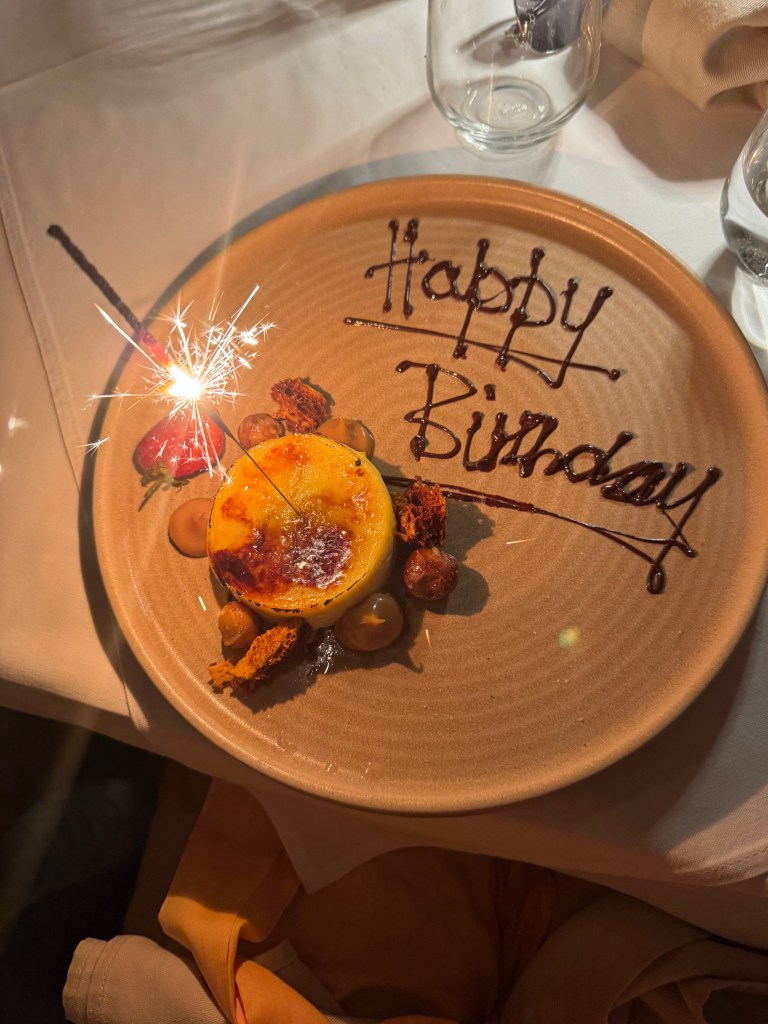
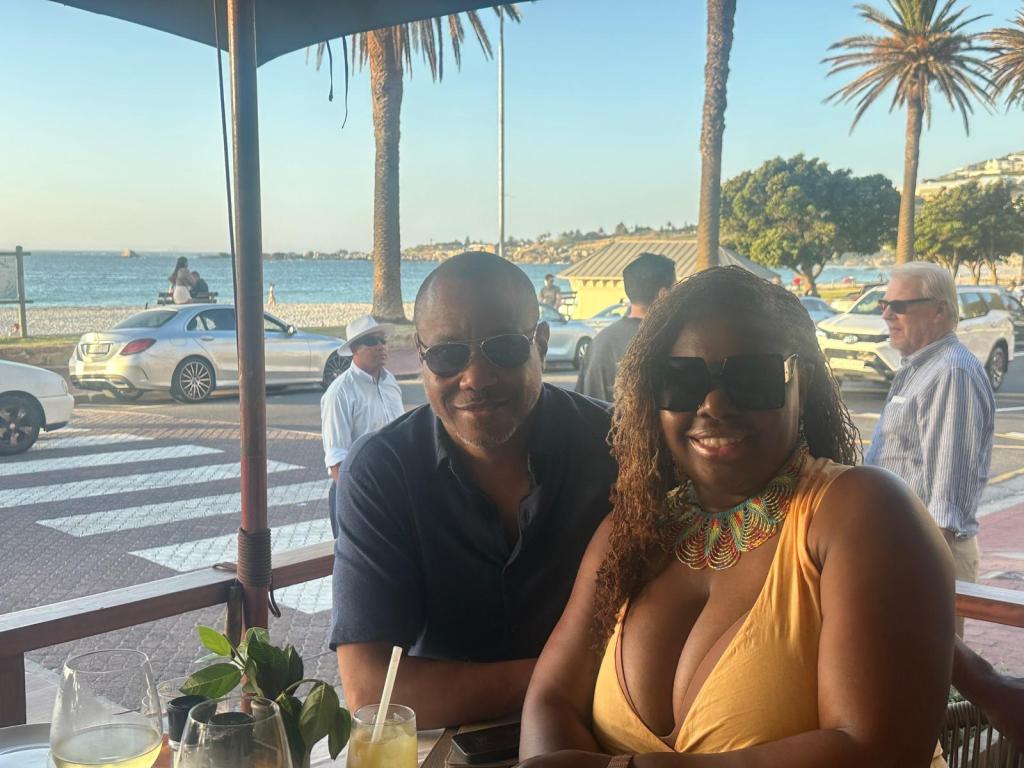
When Sam discovered we were celebrating Nicola’s milestone birthday, his immediate invitation to host a rooftop BBQ exemplified the warmth that makes Cape Town unforgettable. His restaurant recommendation, ZenZero in Camps Bay, proved prophetic. Perched overlooking the beach, it channeled Miami’s Ocean Drive with distinctly African flair, where we watched Atlantic sunset paint the sky in impossible shades while dining on Van Kamp Street.
But Cape Town demanded more than scenic consumption from me; it insisted on historical reckoning.
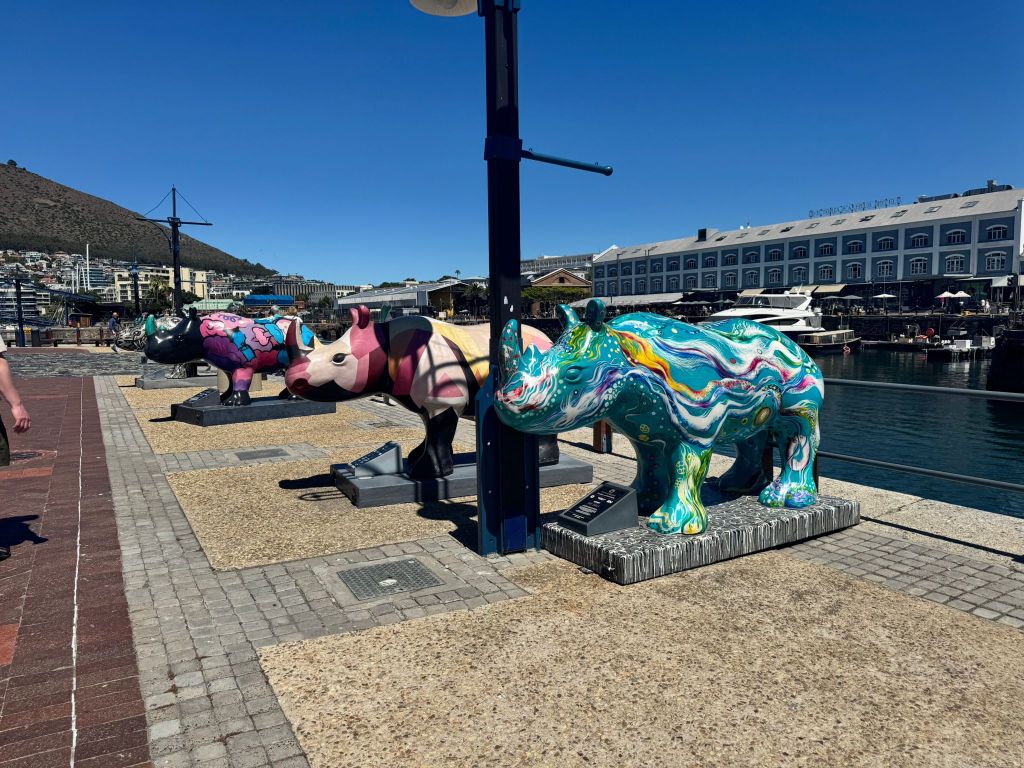
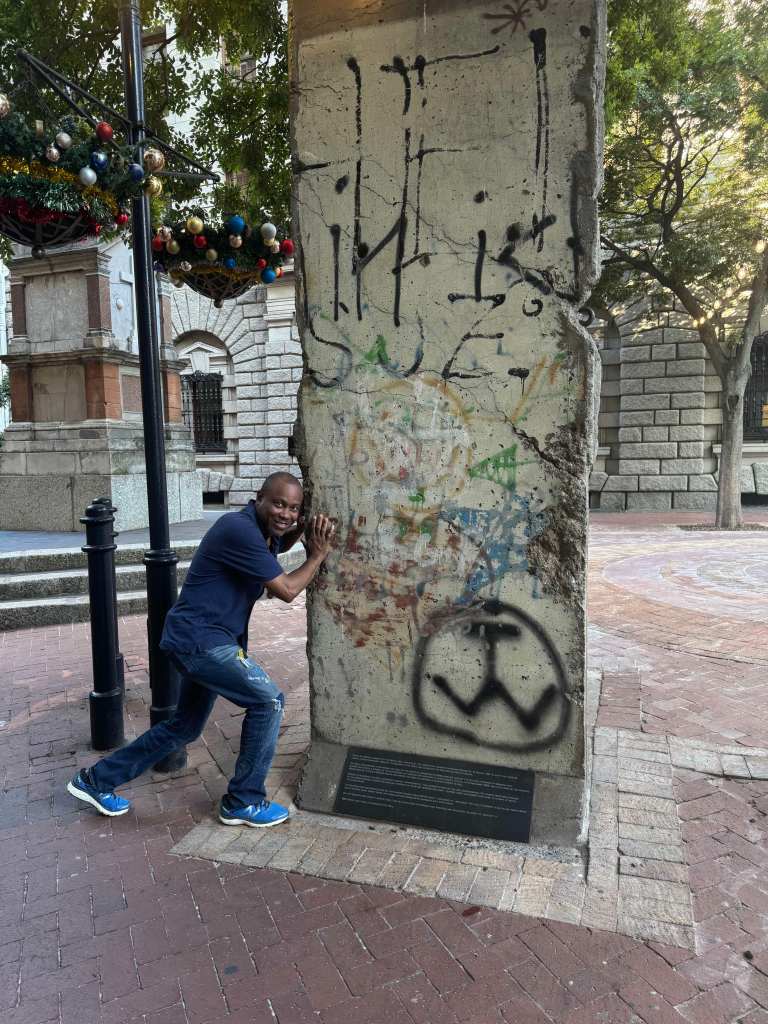
The Cape Town Free Walking Tours provided essential context, led by guides like Milo who lived through apartheid’s darkest chapters. Walking Company’s Garden and St George’s Mall; not a shopping center but a street lined with vendors hawking everything from carved elephants to dashikis. We negotiated prices with local vendors and artisans for souvenirs while processing weightier negotiations that shaped this nation.
For me, someone who protested apartheid at the University of Toronto in the 1990s, pressing for divestment and sanctions, Cape Town represented full-circle completion. The restaurant where I celebrated among friends of all races would have been forbidden under apartheid. The freedom to laugh, dine, and dance together carried profound significance beyond birthday festivities.
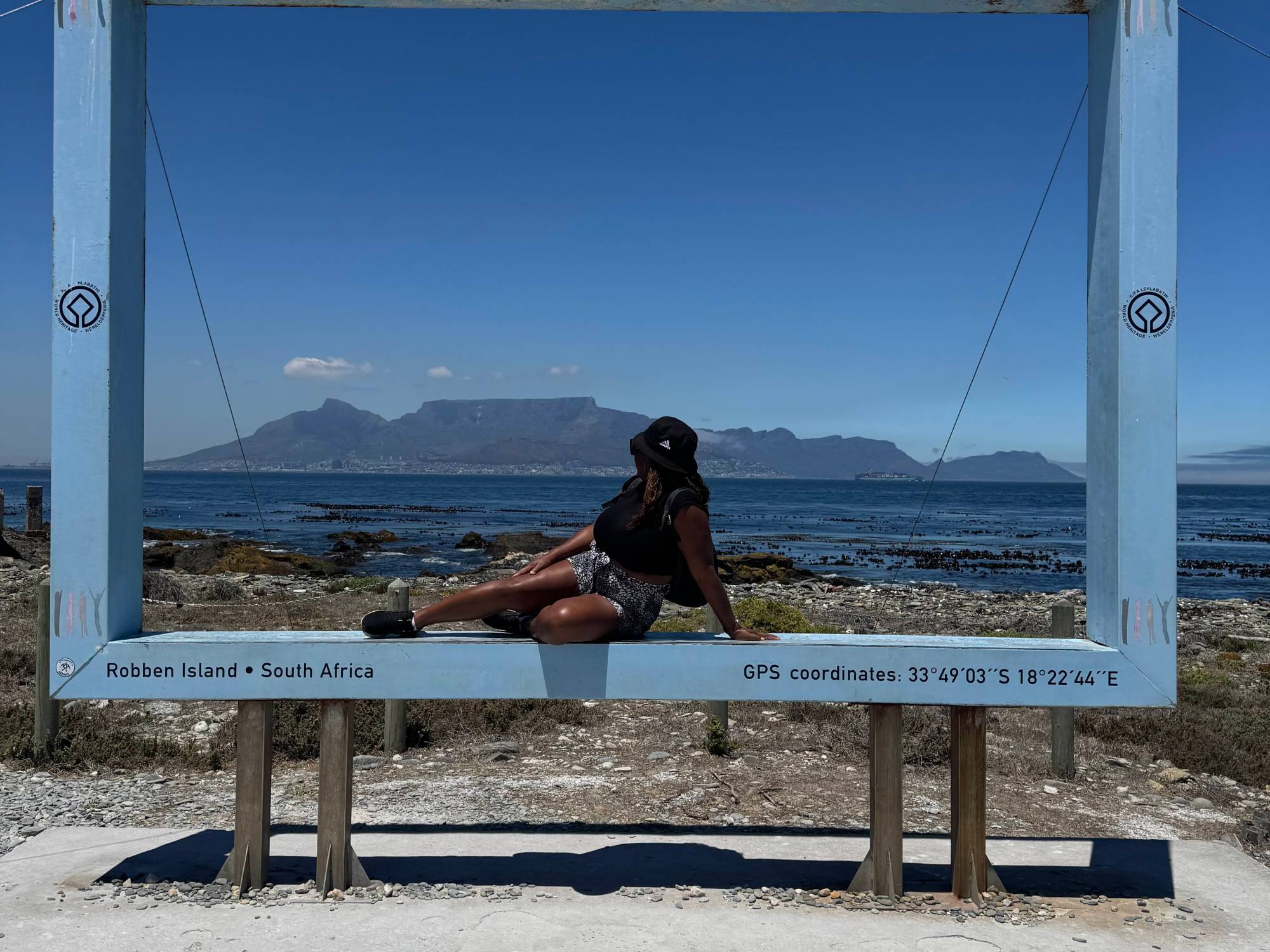
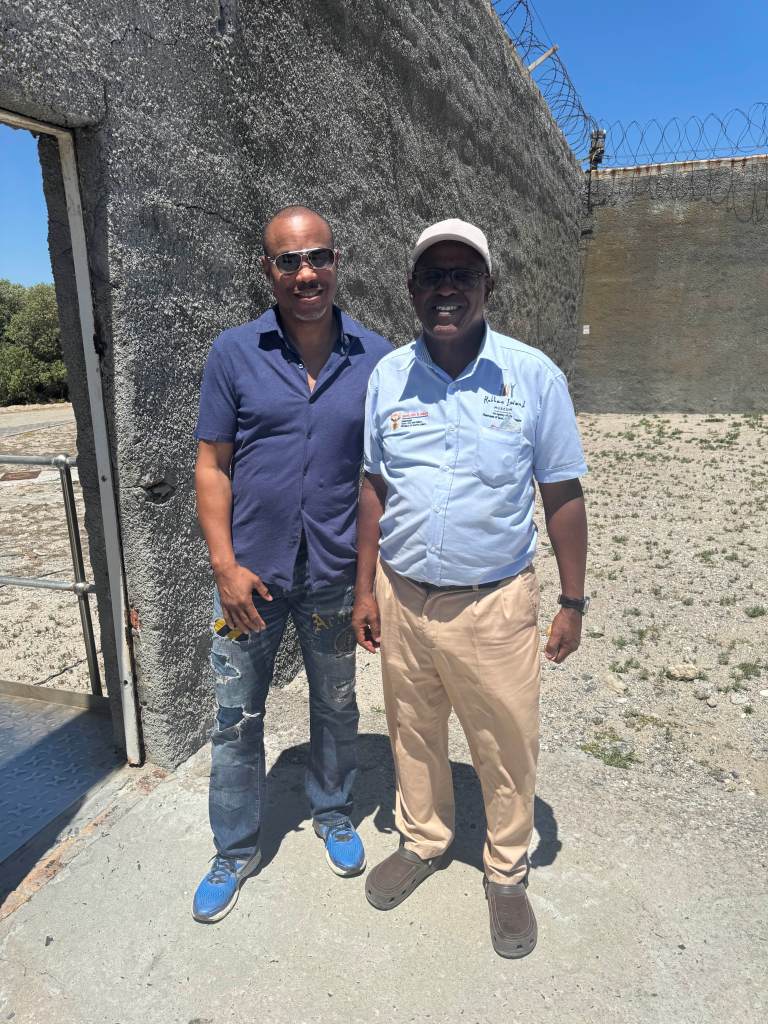
Robben Island crystallized this historical journey for me. The 45-minute ferry ride across choppy waters mirrored the isolation designed to break political prisoners’ spirits. As mainland Cape Town faded, I grasped the psychological warfare intended; not unlike Alcatraz, but with a crucial difference. These weren’t criminals; they were freedom fighters.
Our guide, a former political prisoner who shared these grounds with Nelson Mandela from 1980 to 1985, transformed statistics into human stories that moved me deeply. Mandela’s jail cell comprised of a bare floor, thin mat, red bucket for sanitation, spoke volumes about dignity maintained under dehumanizing conditions. Having seen “The Long Walk to Freedom,” these locations shifted from film sets to sacred spaces where history pivoted.
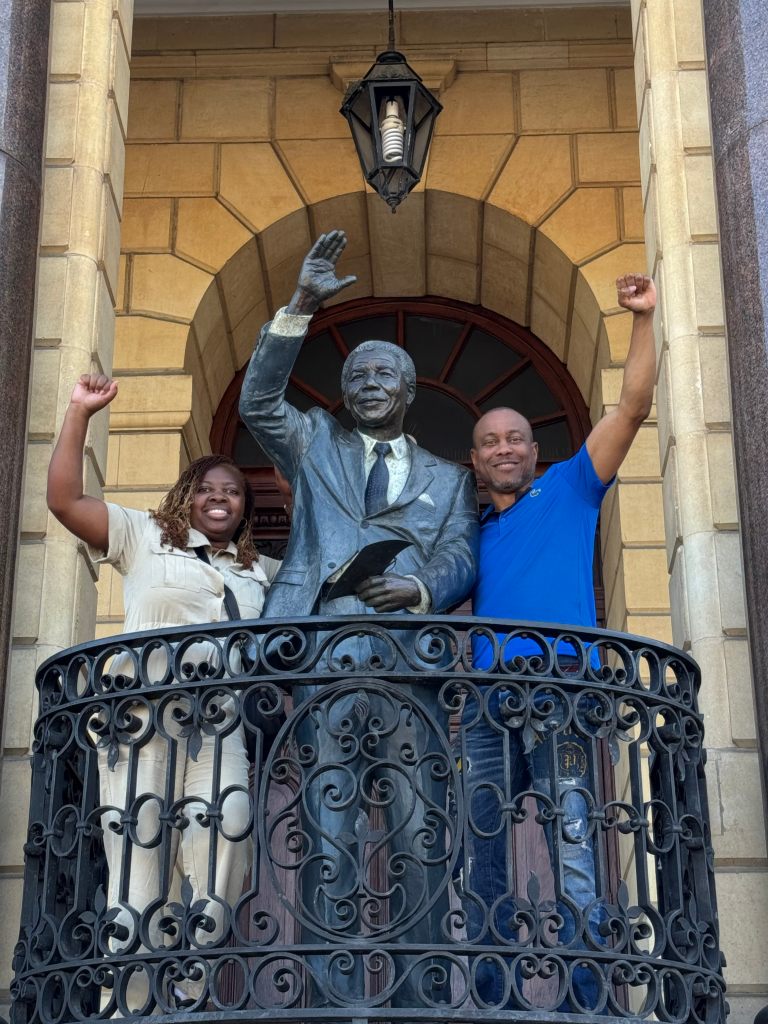
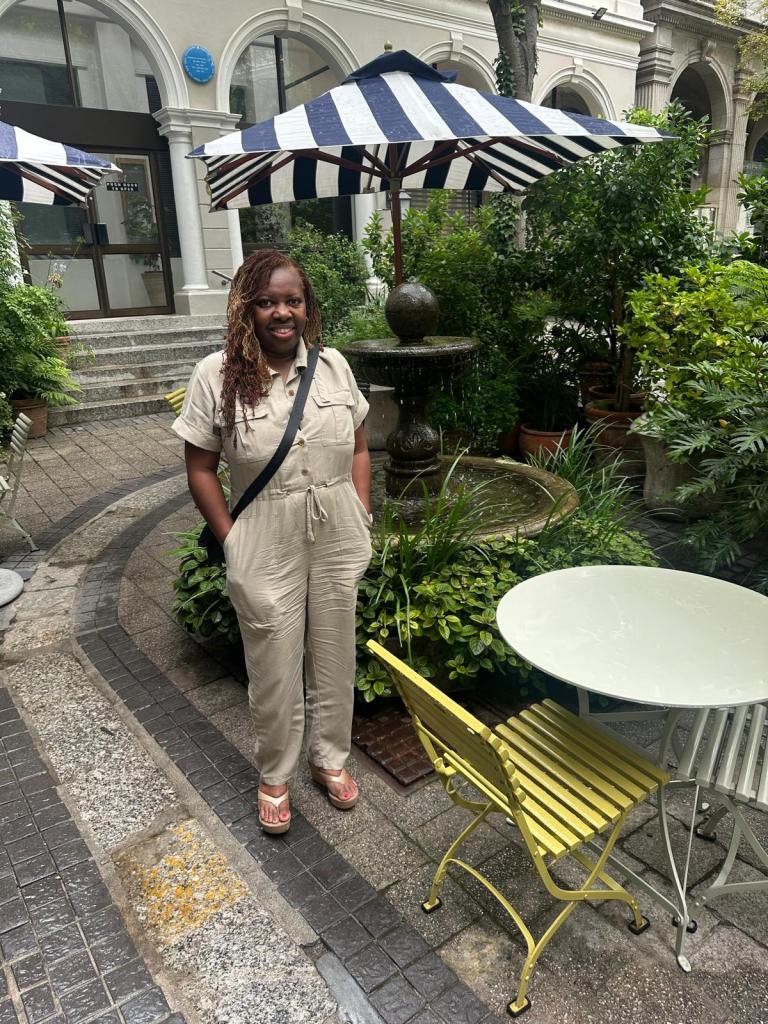
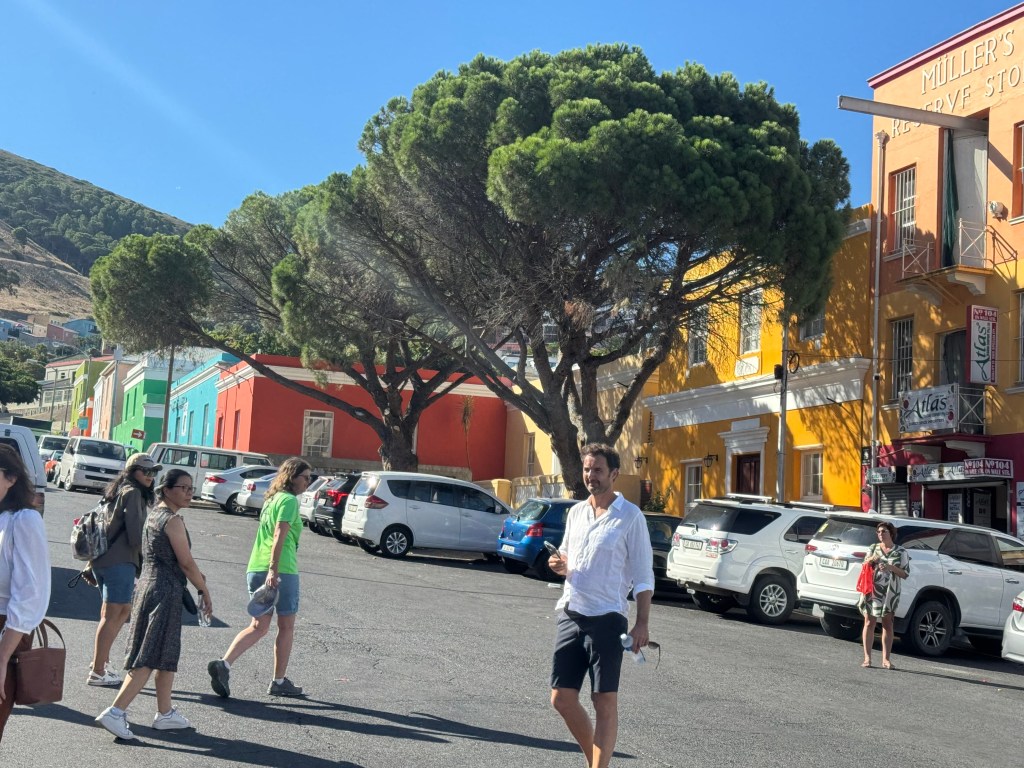
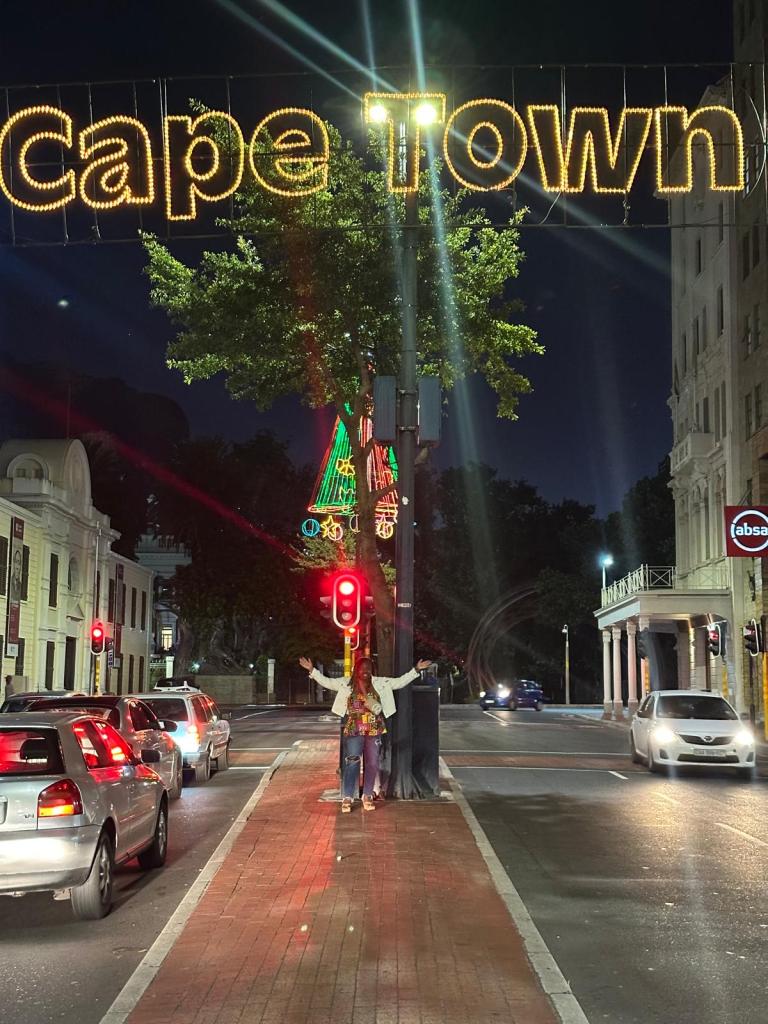

The Bo-Kaap walking tour provided cultural counterpoint to my political education. This Muslim quarter’s rainbow-painted houses told stories of Dutch colonial influence, Asian immigration, and community resilience. Learning that Dutch settlers founded Cape Town in 1652 (28 years after New Amsterdam became New York) placed South African history in global perspective for me.
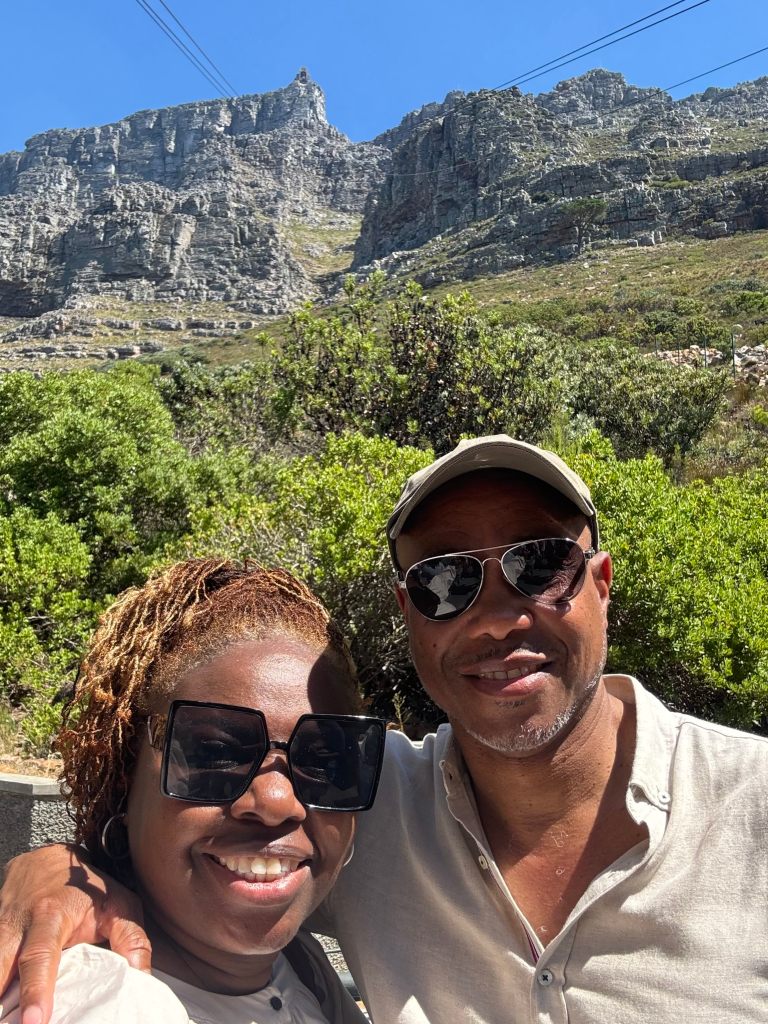
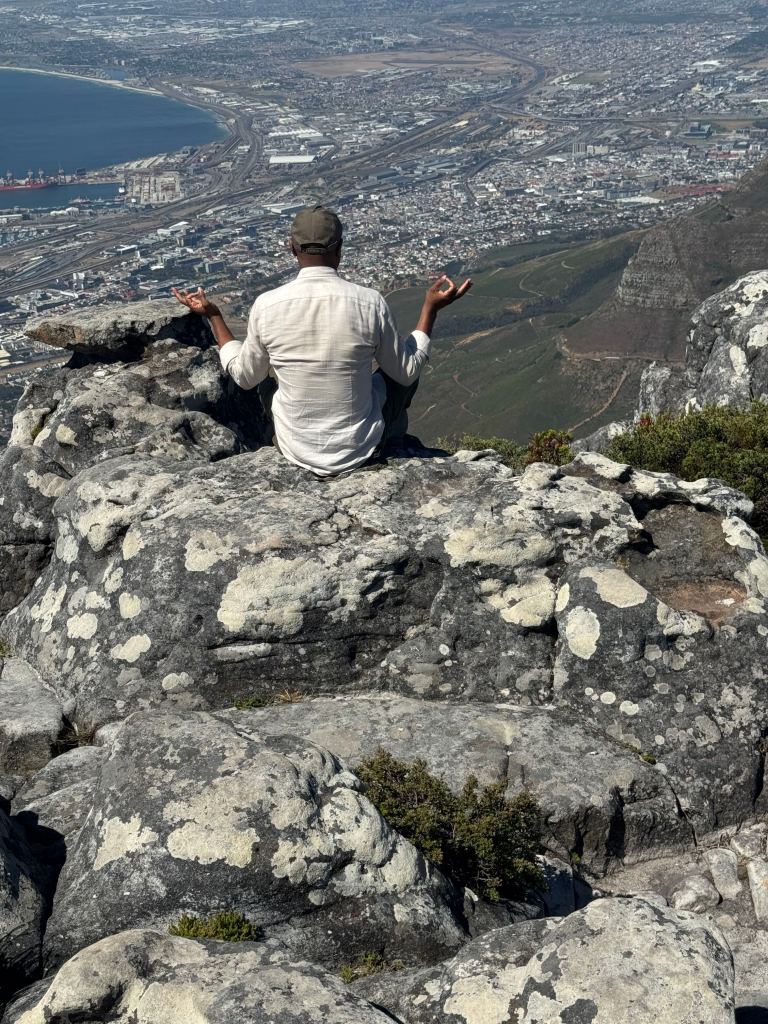
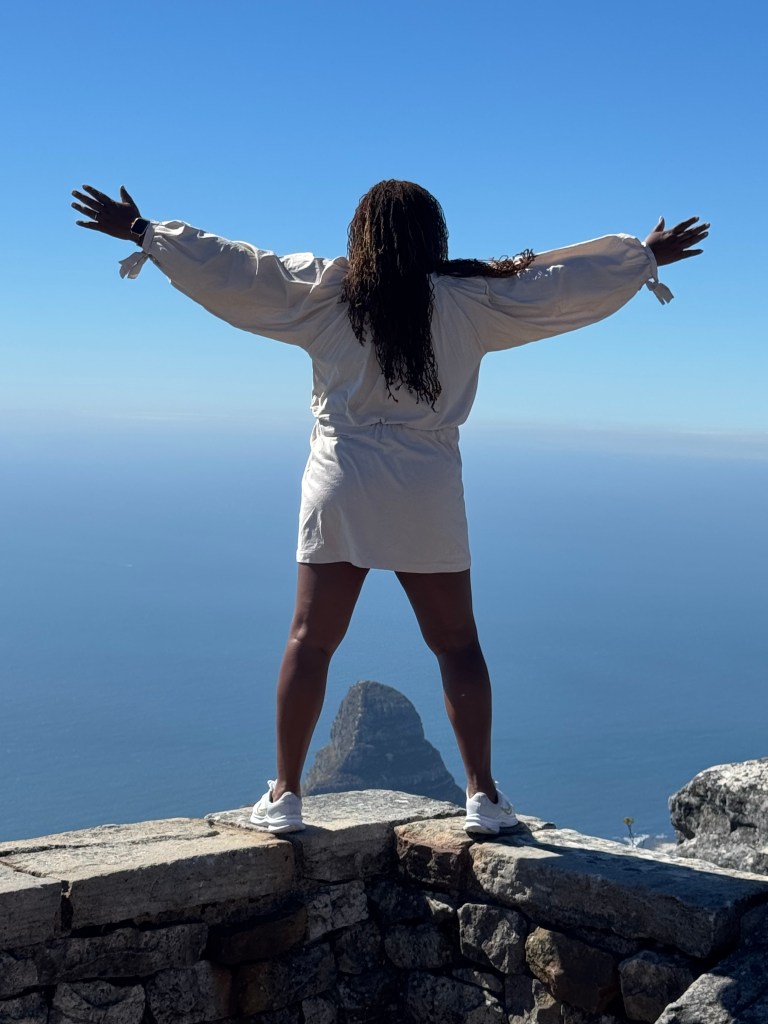
Table Mountain (officially one of the new 7 wonders of nature) demanded its due on my final full day. The spinning gondola ascended 3,500 feet to reveal Cape Town’s full majesty: the bustling port, gleaming downtown towers, and Camps Bay’s pristine beaches where I’d celebrated just nights before. The Atlantic Ocean stretched endlessly westward, carrying my gaze toward home while my heart remained firmly planted in African soil.
Shopping at St George’s Mall yielded more than souvenirs for me. Finding the perfect dashiki and dress for Nicola involved typical Cape Town negotiation, followed by on-the-spot tailoring around the corner. This seamless blend of commerce, craftsmanship, and cultural exchange encapsulated Cape Town’s entrepreneurial spirit that I found intoxicating.
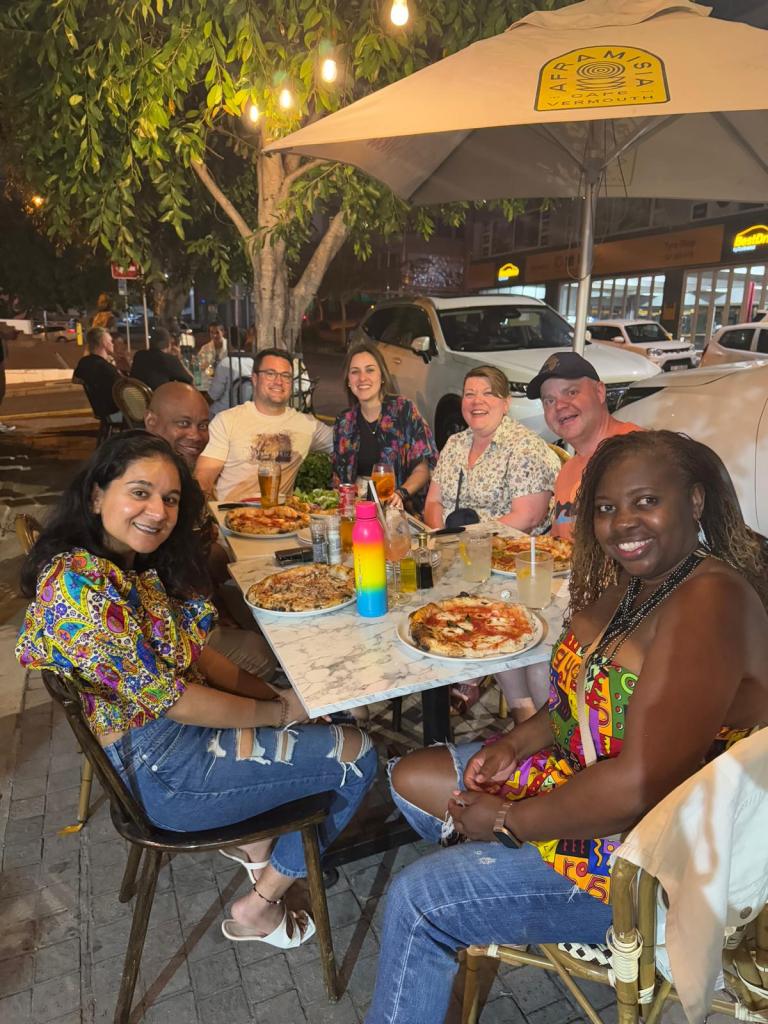
Evening at Pizza Shed on Bree Street provided the perfect finale; wearing local attire, surrounded by international friendships, and sharing stories that confirmed each traveler’s transformative experience. Cape Town had worked its magic on me, weaving historical education with natural beauty, painful truths with joyful celebrations.
As departure loomed, I understood why Cape Town consistently ranks among the world’s most beautiful cities. It’s not just the mountain or beaches or wine—it’s the city’s refusal to let visitors like me remain passive observers. Cape Town insisted on my engagement, challenged my assumptions, and rewarded my openness with unforgettable experiences.
The rooftop BBQ I missed became legendary among my travel companions, but the connections I forged with Sam, with fellow travelers, with the city itself proved more valuable than any single evening. Cape Town didn’t just host me; it adopted me, leaving indelible marks on my heart as I prepared to return home forever changed.
My African adventure was far from over, but Cape Town had set an impossibly high standard for what would follow.
 Drop Of Golden Sun