Every travel photo of Cartagena looks the same. Bougainvillea spilling over a mustard-yellow wall. A woman in a fruit bowl hat. Cobblestones glowing gold at dusk. You’ve seen it a hundred times on Instagram, and you’ll see it again the moment you land.
Those photos aren’t wrong. Cartagena really does look like that. The old walled city is almost absurdly beautiful. But if that’s all you do, you’ve skimmed the surface of a place that has a lot more going on underneath it.
I spent five days here, split between a converted 17th-century convent in the old town and a hotel right in the thick of the historical centre. I did the polished, candlelit dinner. I also ate a mango off a street cart at 11am and called it breakfast. Both were correct choices.
At some point, it occurred to me that I’d travelled thousands of kilometres to voluntarily enclose myself: sleeping inside walls built to keep the world out, in a city built to keep pirates out. The walls worked so well that they became the attraction. That felt like it meant something.
This is what I’d do if I were going back.
How to Get Under the Skin of the City
The easiest mistake in Cartagena is spending all your time inside the walled city. It’s beautiful, yes. It’s also where every other tourist is. Here’s how to actually get oriented, and then get past the obvious stuff.
Start with a bike tour, and start it in the new city. Most visitors skip this part entirely, which is a mistake. The new city is quiet and residential. Wide, clean streets, well-maintained waterfront paths where locals jog and cycle in the early morning. No tourist restaurants, no souvenir stands. Then there’s the beach, properly transformed in recent years. Wide and open, with dedicated sports areas, paddleboard rentals, swimmers, people playing ball in the sand. Safe, alive, used by actual people who live here. The guide kept us there long enough to feel the difference before he took us anywhere else.
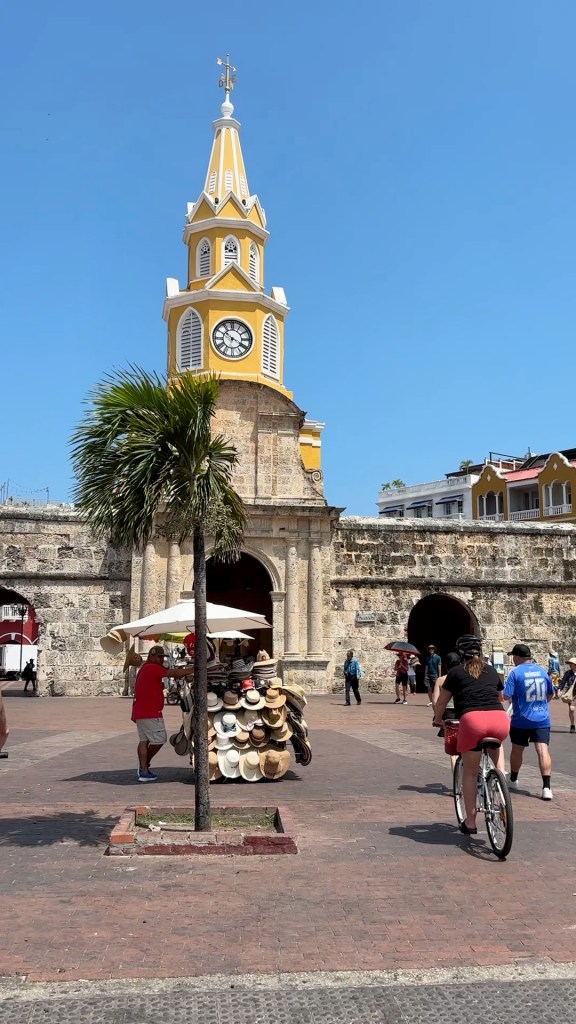
Through the clock tower gate into the old town. You hear it before you fully process it: music rising from somewhere above you, the clatter of a rooftop bar, a cumbia rhythm leaking from a restaurant doorway. Then the smell of something frying, of coffee, of flowers sitting in the heat all morning. Then the colour: dresses hung in doorways, souvenirs spilling onto the pavement, buildings painted in shades that have no business looking that good together. And people, suddenly, everywhere. One moment you’re in a calm residential city. The next you’re inside walls that have been standing since the 1600s and the whole world has changed register. Do this on day one.


The mural culture in Getsemaní (the neighbourhood just outside the walled city) is worth understanding before you wander through it. Local artists started reclaiming its concrete walls in the early 2000s as an act of community self-expression. The city government eventually formalised it with the first Ciudad Mural festival in 2013, bringing in international artists. The result is over 30 large-scale murals rooted in Cartagena’s Afro-Colombian history. The most photographed is Prisma Afro, a 35-metre portrait of an Afro-Colombian woman, the tallest mural in Colombia. Nearby, independence hero Pedro Romero is painted as an astronaut holding a flame, the words “Here the insurgency of the people was born” written beside him. Bike and walking tours focusing specifically on the murals are widely available. Take one before you head out on your own , the context changes what you see.
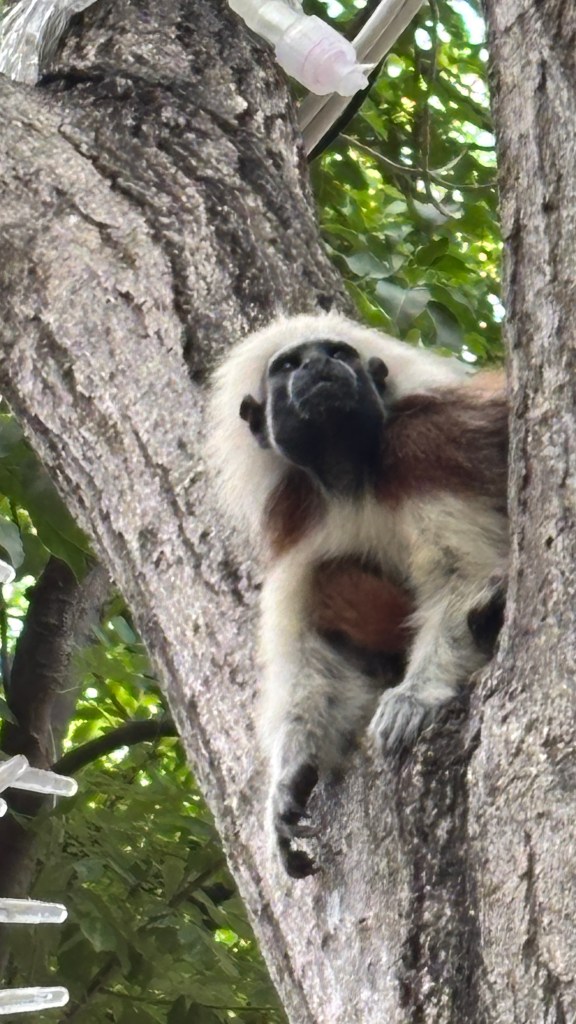
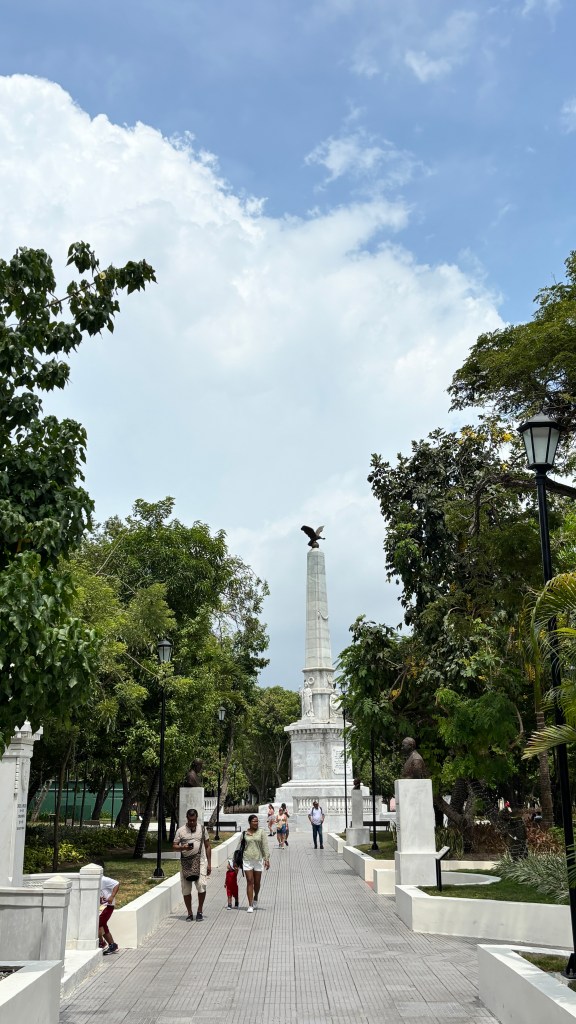
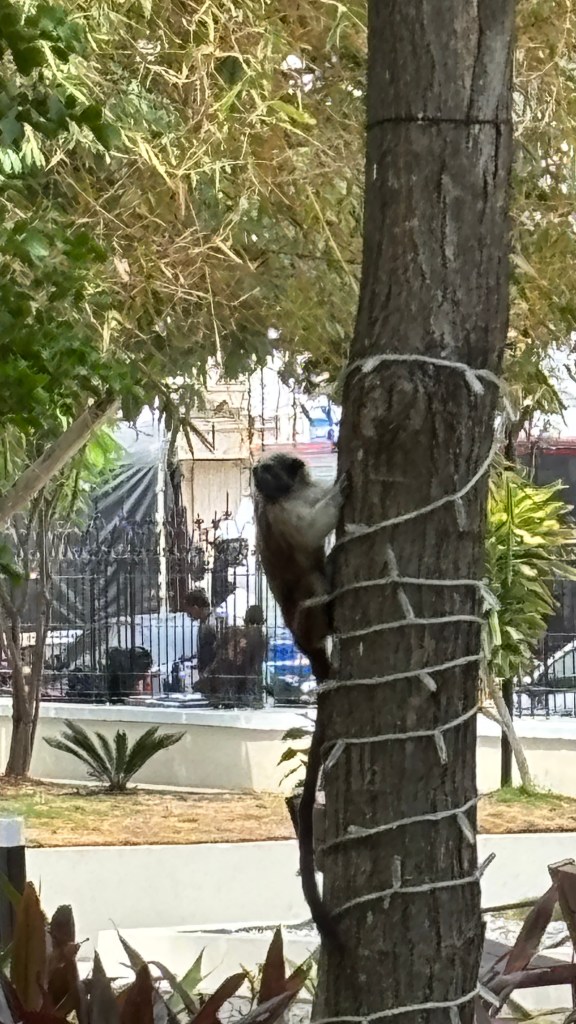
Then there’s Parque del Centenario. We found it by accident, walking back from the boat pier after the Rosario Islands. There was a small crowd stopped on the path ahead, heads tilted up, fingers pointing at the trees. We got closer. And there, in a gated city park surrounded on all sides by tall modern buildings, concrete and glass pressing in from every direction, were sloths and monkeys, moving through the canopy like the city had been built around them rather than the other way around. The park opens during the day only, with security guards and clean paths. Nothing about it prepares you for the strangeness of spotting a sloth in an urban tree with office buildings looming overhead. Nobody around us seemed particularly surprised.
One more thing: buy a lemonade from a street vendor. You’ll understand immediately.
Note: the midday heat is not subtle. Plan anything active for early morning or late afternoon. From roughly noon to 4pm, find a shaded restaurant, a pool, or a cocktail-making class (see Eat, Drink, Repeat below for a suggestion). The city has been dealing with this heat for centuries. Follow its lead.
Where to Stay: Three Hotels, Three Very Different Experiences
Where you sleep in Cartagena shapes the entire trip, so this is worth thinking through before you book.
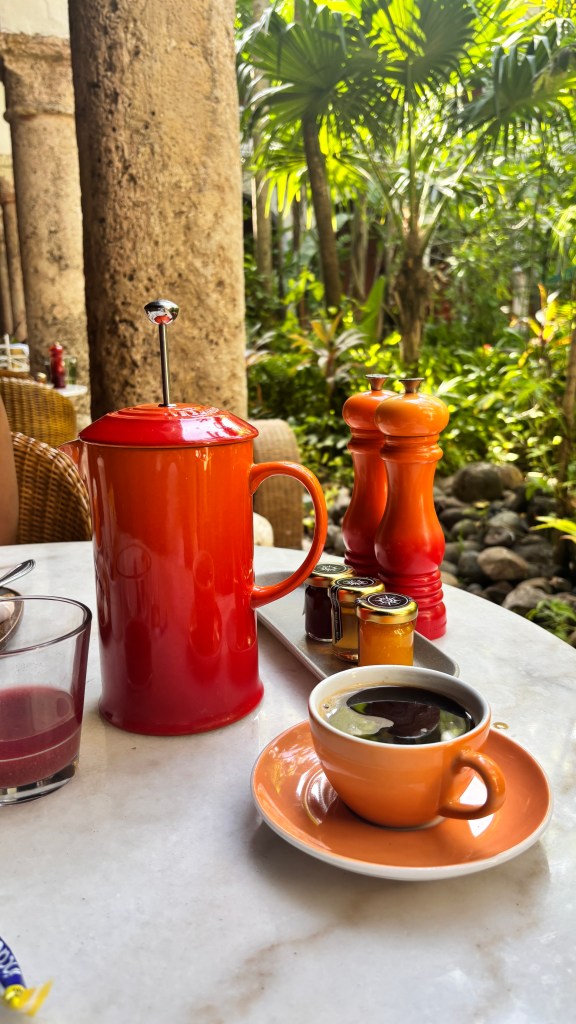
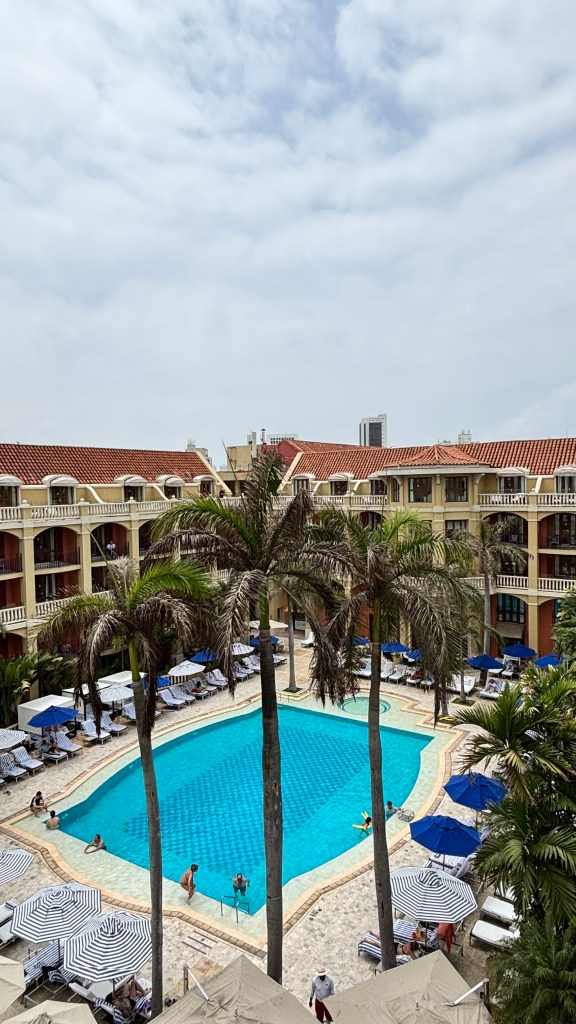
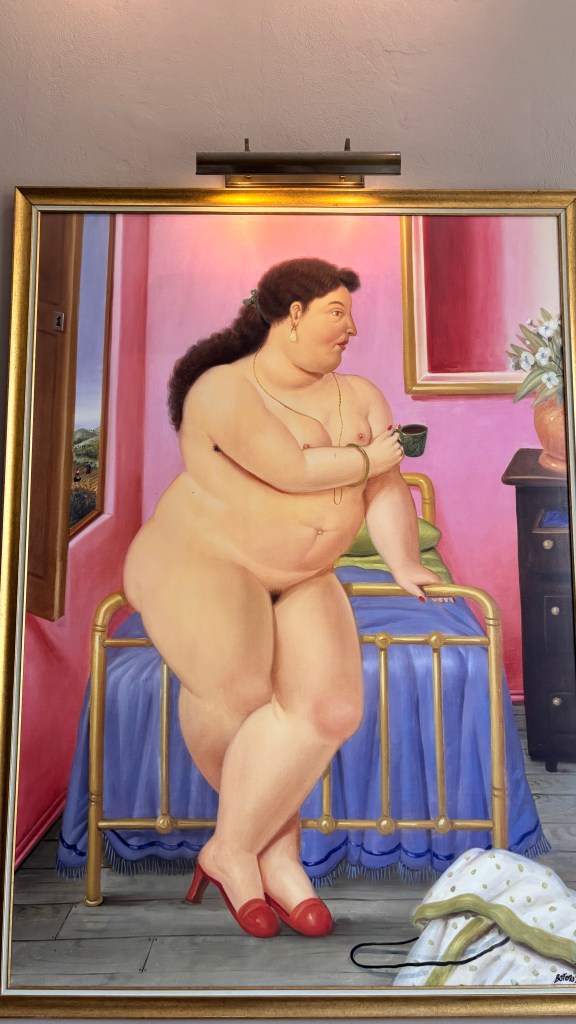
If you want to be pampered from the moment you arrive, Sofitel Legend Santa Clara is the move. It’s a 17th-century convent and hospital converted into one of the most atmospheric hotels in South America. The bones of the building are still there: the cloisters, the chapel, the courtyard garden. They’ve layered in a proper spa, a beautiful pool, and a restaurant called Jardín Santa Clara where breakfast happens surrounded by tropical plants and Colombian coffee that will ruin you for everything else. The rooms are designed by and for artists, including one tied to Botero, Colombia’s most famous painter. Nuns once lived and died within these walls. Now there’s a spa. The building holds both things without apology.
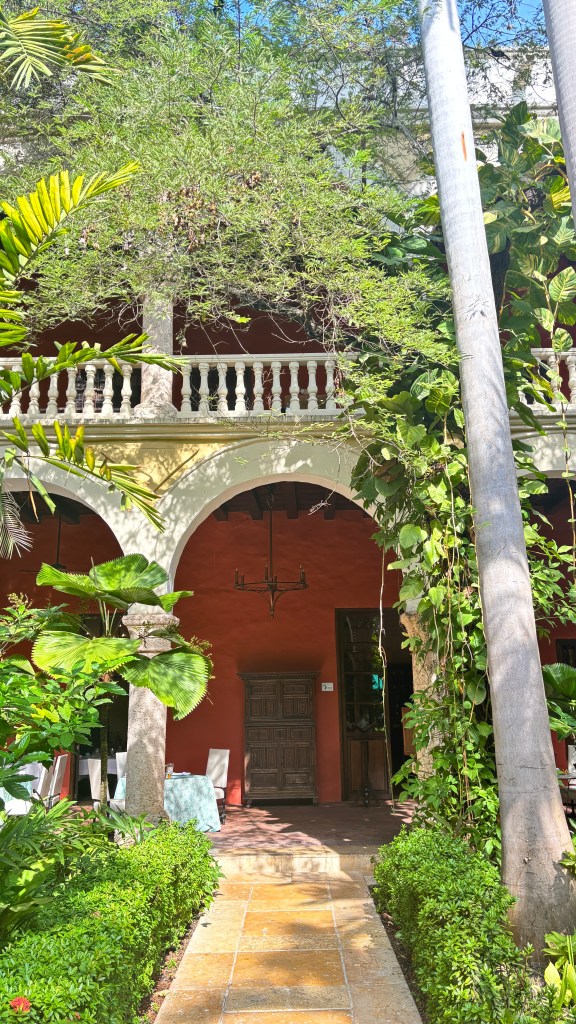
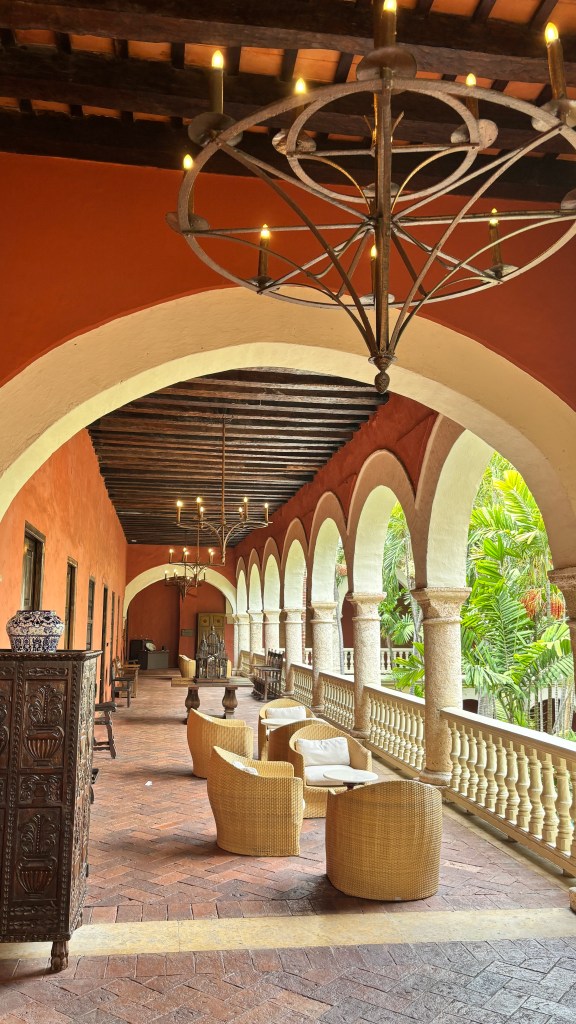
For something more intimate, Hotel Casa San Agustín is three restored 17th-century colonial homes connected around a peaceful courtyard, with a 300-year-old aqueduct at its centre that somehow still looks like it belongs there. Some rooms have traditional wooden balconies overlooking the street, the most lavish suites have private terraces with plunge pools, and the food at Alma restaurant is serious. It holds a Michelin Key and manages to feel like a private home rather than a hotel.
For something more embedded in the city, OSH Hotel puts you right in the historical downtown. No buffer between you and the street. You walk out the front door and you’re already in it: the noise, the colour, the smell of coffee and exhaust and something frying nearby.
the Sofitel and Casa San Agustín are both luxury prices. Worth it if this is a splurge trip. OSH gives you location and personality at a more reasonable price point.
Eat, Drink, Repeat
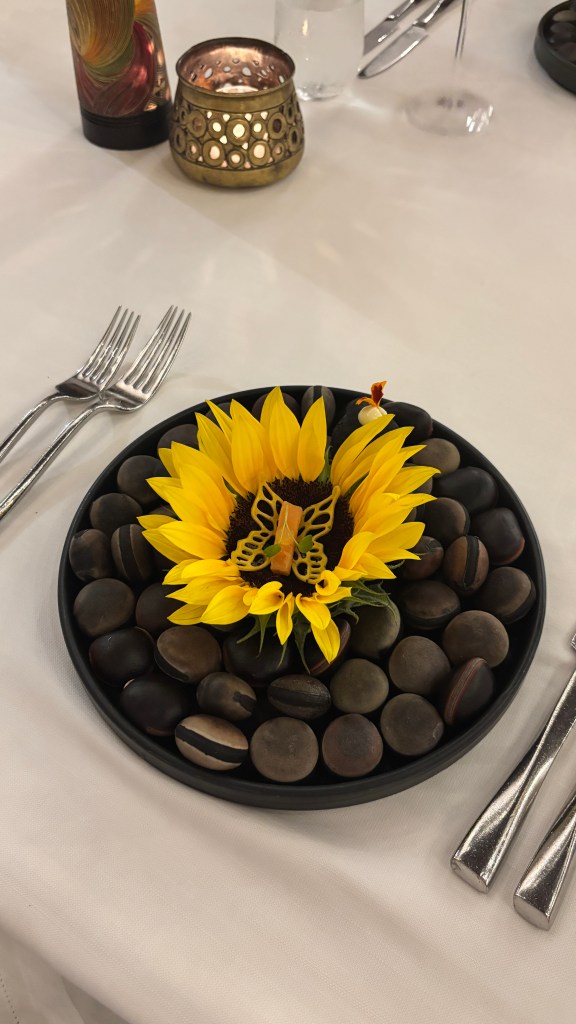
Start at the top. 1621 Restaurant at the Sofitel Santa Clara offers a six or ten-course tasting menu with wine pairings that is, by any measure, a proper meal, the kind where you lose track of time and don’t particularly mind. Book ahead.
For something more street-level, the Gabriel García Márquez Foodie’s Walking Tour by Impulse Travel is two and a half hours sampling bites and drinks tied to passages from Gabo’s novels. It sounds like a gimmick. It isn’t. Spend an afternoon at Cartagena Cooking School learning to make arepas and mix local cocktails. A good way to be indoors, useful, and fed during the worst of the heat. For a different evening, the rum tasting at Casa Dictador pairs Colombian aged spirits with the city’s sugarcane history in a setting that earns the word atmospheric.

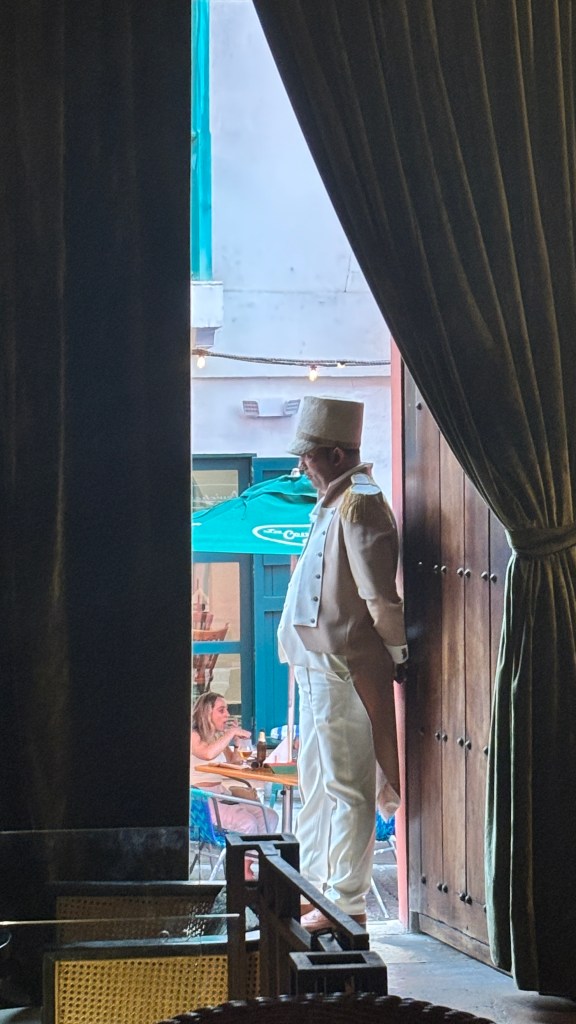

After dark, find your way to the rooftop bar at Townhouse. The city looks best from up here at night: all lit up, the walls glowing, the noise rising from below. From that height, with a cold Club Colombia in hand and a decent breeze coming off the bay, you start to understand why someone built those walls in the first place. And why, centuries later, nobody really left.
The museum circuit is walkable and worth it. Before you get there, one landmark you shouldn’t skip entirely is the Castillo de San Felipe de Barajas, a massive 17th-century hilltop fortress about fifteen minutes from the walled city. We didn’t cover it in depth on this trip but it warrants its own afternoon; several dedicated guides and tours cover it well. The Museo Naval del Caribe covers colonial maritime history. The submarine simulator is more fun than it sounds. The Museo del Oro Zenú on Plaza Bolívar has over 600 gold and ceramic pieces from indigenous Zenú culture and it’s free, which feels almost suspicious. For living craft rather than museum displays, the Ninha Zenú Weaving Collective welcomes visitors to their workshop. Your purchase goes directly to the families.
Note: if you want to drink like you’re actually in Colombia, order a michelada, try a lulo sour, or ask what’s made with aguardiente. The national spirit is anise-flavoured, polarising, and you should try it at least once.
Day Trips Worth Your Time
Two trips are worth pulling you away from the city. The Rosario Islands: a short boat ride from the pier, warm water, secluded beaches, and a pace that makes Cartagena feel like a different world. And scuba diving with Diving Planet Cartagena, an operation that runs active coral restoration work and feels nothing like a standard tourist dive. Both covered in full in the next post. Both worth an overnight. Your hotel concierge can arrange either.
The best Cartagena experiences don’t always happen inside Cartagena. A short drive out of the city opens up a different side of the coast entirely. Quieter, less photographed, and run by the communities that have been here far longer than the tourist infrastructure. Boquilla Eco Tours takes you through ancestral mangrove tunnels by canoe, led by local fishermen turned conservation guides. The Batambora Drum School runs percussion workshops teaching traditional Afro-Colombian rhythms to local youth. We dropped in for what I assumed would be a polite hour of gentle cultural appreciation. Claire had other ideas. She drummed with such commitment that she bruised a finger and declared it the highlight of the trip. I’ve learned not to argue with results.
Cartagena rewards slowing down. Not the manufactured slow of a resort itinerary, but the actual kind, where you end up sitting on a rooftop with a cold beer at 10pm, watching the old city glow below you, wondering why you almost didn’t come. It’s hot, occasionally chaotic, and not everything goes to plan. You’ll spend twenty minutes photographing a brass door knocker (ornate hands, lions, and faces on every colonial door in the old town, each one slightly different) and delete most of the photos on the plane home. The restaurant you read about will be closed on a Tuesday for no apparent reason. Go anyway. Stop trying and the city finds you. Something about being enclosed helps with that.
This is the first of three posts from the same Colombia trip. Cartagena is where it started, behind the walls. From here we took a boat out to the Rosario Islands, which are the opposite of walled, and then went inland to Mompox, a town the river cut off by accident and never reconnected. Read them in order or skip around. The walls turn up in all three either way.

